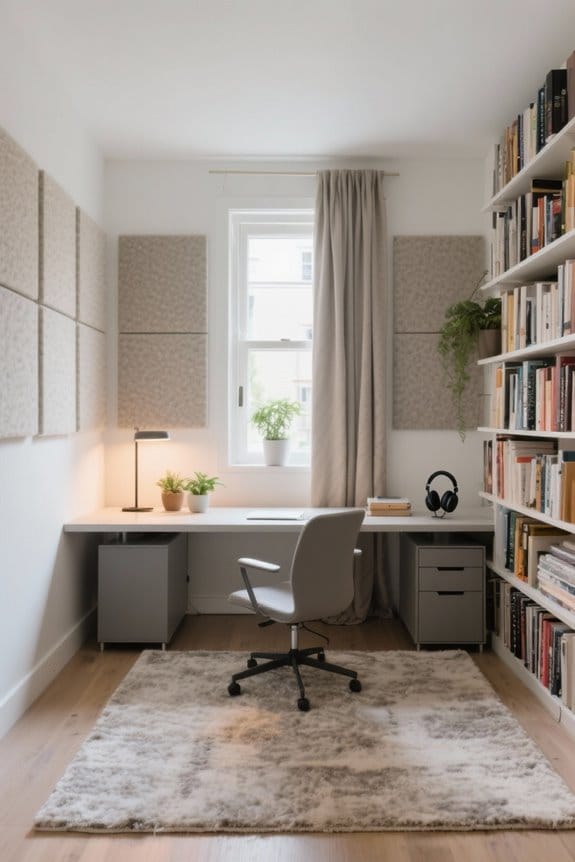
Color and decor greatly affect mood and productivity at workstations. Calming colors like blue and green enhance focus and reduce stress. Meanwhile, vibrant colors such as yellow and orange can stimulate creativity and enthusiasm. Thoughtful color selection creates distinct work zones, supporting tasks like collaboration and relaxation. Additionally, well-designed decor contributes to a positive ambiance and employee well-being. Understanding these elements can lead to improved workplace satisfaction. Discover how to implement these strategies effectively for your environment.
Key Takeaways
- Color selection impacts emotional responses; calming hues like blue and green promote focus, while vibrant colors like yellow inspire creativity.
- Thoughtful decor enhances ambiance, with natural elements fostering relaxation and boosting overall employee well-being.
- Specific color combinations, such as blue and yellow, can effectively enhance both concentration and creativity within workspaces.
- Personalizing workstations with color and decor increases comfort and productivity, creating a more inviting work environment.
- Delineating work zones with different colors can cater to emotional needs, increasing morale and promoting collaboration in shared areas.
The Role of Color in Shaping Workplace Emotions
Color plays an important role in shaping emotions within the workplace. Research in color psychology shows that colors influence workplace emotions greatly. Calming colors, such as blue and green, help reduce stress and promote focus. These hues create environments that are more comfortable for prolonged tasks. In contrast, stimulating colors like yellow can spark creativity and happiness. However, it is essential to use these colors thoughtfully in collaborative spaces. A well-balanced mix of neutral tones and stimulating colors enhances both energy and relaxation. When considering decor, thoughtful color selection is significant, as it directly links to employee productivity and satisfaction. Ultimately, understanding the role of color can transform an office atmosphere into a more effective workspace. Additionally, incorporating UV and fade-resistant options in decor can help maintain the longevity and vibrancy of colors in the workspace.
Understanding the Psychological Effects of Color

Colors play a pivotal role in influencing mood and behavior beyond the workplace. The psychology of color greatly impacts employee productivity. For instance, blue enhances concentration and promotes stress reduction, making it ideal for workstations. Likewise, green alleviates eye strain and fatigue, fostering a comfortable environment for prolonged tasks. In creative spaces, vibrant colors like orange can boost enthusiasm and innovation. Choosing appropriate color schemes is essential as subtle changes in decor can lead to drastic shifts in mood. Minimalist designs enhance professionalism and accessibility, which can also contribute to a positive work environment. Consequently, selecting colors meticulously in the workplace is vital for optimizing productivity. Organizations should consider ergonomic and sustainable design principles in their color choices. Implementing intentional color strategies enhances overall employee satisfaction and performance effectively.
Combining Colors for Optimal Productivity

How can the right combinations of hues lead to greater productivity in the workplace? In modern office spaces, color psychology plays a key role. Combining blue and yellow can enhance focus and creativity, creating a balanced environment. Integrating green elements reduces fatigue and increases overall well-being, improving productivity during long hours. Utilizing warm accent colors, like red and orange, stimulates energy in collaborative areas, motivating teams effectively. Neutral colors, when paired with vibrant shades, prevent overwhelming employees while maintaining a dynamic atmosphere. By tailoring color combinations to specific functions within the office, companies can foster engagement and satisfaction. This approach not only optimizes employee performance but also creates an appealing workspace that aligns with ergonomic and sustainable design principles.
Creating Distinct Work Zones Through Color

Creating distinct work zones within an office can greatly enhance productivity and employee satisfaction. Color plays an essential role in defining these spaces. Calming colors like blue and green are ideal for focus areas, promoting concentration and productivity. In contrast, energizing colors such as yellow and red are effective in collaborative zones, where interaction thrives. Subtle shifts in color throughout the workspace help delineate functional areas while catering to diverse emotional needs. Additionally, warm colors in break areas foster relaxation, balancing energy and calmness. By strategically implementing distinct color zones, companies can positively influence employee mood and overall morale. This thoughtful approach enhances workflow and supports the psychology of workspace design, ensuring a sustainable and ergonomic environment. Using high-quality holographic sticker papers can further elevate the decor by adding vibrant and eye-catching elements to the workspace.
The Impact of Decor on Ambiance and Well-being

When considering the overall atmosphere of a workspace, decor elements play a pivotal role in setting the tone and enhancing employee well-being. The choice of colors impacts the ambiance considerably, while elements like plants and artwork can reduce stress and improve mood. Research in psychology shows that natural elements promote calmness, fostering a relaxed environment. Office designs that reflect professionalism and company branding reinforce employee identity, enhancing satisfaction. Personalization of workstations, such as adding family photos or motivational quotes, boosts productivity and comfort. Additionally, well-arranged decor stimulates creativity and collaboration in shared spaces. For instance, using environmental resistance features in office decor can ensure longevity and durability, maintaining a professional look over time. As a result, investing in thoughtful decor can lead to a happier, more productive workforce, making it clear that decor matters in every workplace.
Frequently Asked Questions
How Does Color Affect the Workplace?
Color affects the workplace through temperature and saturation, with warm colors energizing creativity and cool colors promoting calm. Vibrant hues create dynamic environments, while neutral shades enhance harmony, underscoring the importance of color symbolism and trends.
How Can Color Influence the Mood of a Design?
Color influences design mood through symbolism and emotional resonance. Thoughtful palette selection combining bright hues with soft tones and warm colors alongside cool shades fosters visual harmony, enhancing design aesthetics and inviting spaces through effective accent details.
How Does Color Psychology Impact Today’s Workshop?
Color psychology profoundly impacts today’s workshops, as color dynamics influence emotions and productivity. Thoughtful color choices based on perceptions and associations create ideal color schemes, enhancing balance, fostering creativity, and aligning with contemporary color trends and preferences.
Does Desk Color Affect Productivity?
Statistics reveal that 68% of employees believe desk aesthetics impact productivity. Ideal color selection enhances workplace ambiance, as specific shade effects stimulate creative flow and emotional response, improving task engagement and overall workspace organization through thoughtful design elements.