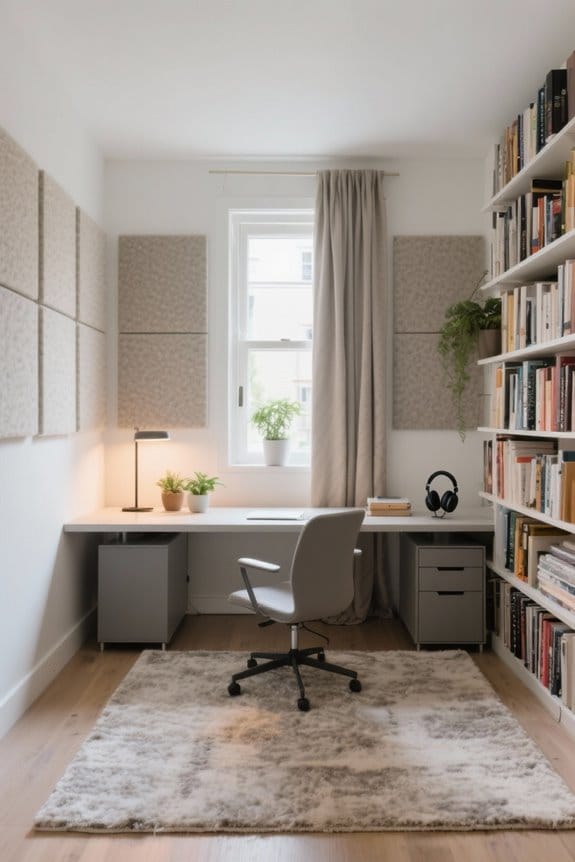
To add plants to a workstation without sacrificing space, consider utilizing vertical space with hanging plants and integrating greenery into existing furniture. Maximize shelf space for plant displays and create a green wall for small areas. Low-maintenance plants are ideal for easy care. Position plants strategically for best light and use multi-tiered planters to organize space. These methods enhance air quality and aesthetics, fostering a more productive work environment. Explore additional options for improving your workspace.
Key Takeaways
- Utilize hanging plants near windows or desks to enhance vertical space and add visual interest without occupying surface areas.
- Create a green wall using various plant species to improve air quality and boost employee mood in limited vertical spaces.
- Integrate plants into existing furniture like shelves or room dividers to maximize space while softening hard edges in the workspace.
- Employ multi-tiered planters to organize limited areas, create compact plant displays, and foster a visually appealing environment.
- Select planters with effective drainage to maintain healthy plants and a tidy appearance, ensuring easy maintenance in small workstations.
Utilize Vertical Space With Hanging Plants
Hanging plants serve as an effective way to utilize vertical space in a workstation. By suspending these indoor plants from ceilings or wall-mounted fixtures, one can draw the eye upward, creating an impression of a larger area. Varying the heights of hanging plants adds visual intrigue, transforming empty corners or dull spaces into vibrant focal points. Lightweight plant hangers and macramé are suitable options for easy installation near windows or over desks, maintaining valuable floor space. Plants like pothos and string of hearts thrive well indoors and provide cascading effects, enhancing aesthetic appeal. Incorporating hanging plants not only beautifies the environment but also contributes to improving workplace air quality. Consider using hanging plants to create a healthier, more inviting work atmosphere. To further enhance workspace organization, consider integrating stylish file carts that maximize storage potential without sacrificing aesthetics.
Integrate Plants Into Existing Furniture

Integrating plants into existing furniture enhances the functionality and aesthetics of a workspace. By leveraging available tables, shelves, or room dividers, one can create a dedicated space for plants, improving both organization and visual appeal. Positioning plants on surfaces like side tables or bookcases helps to utilize vertical space, thereby preserving floor area. Employing plant stands is another option. These stands elevate greenery on desks or shelves, adding dimension to the office space. Incorporating trailing plants on existing furniture softens hard lines, creating a more inviting atmosphere. Identifying empty or underutilized surfaces allows for seamless integration of plants, maximizing natural light and promoting a healthier, ergonomic environment. Consider these strategies to transform your workspace effectively. Additionally, hanging closet organizers can be repurposed for plant storage, utilizing vertical space efficiently and adding an innovative touch to plant display.
Maximize Shelf Space for Plant Displays

Maximizing shelf space for plant displays can greatly enhance a workstation’s overall look and function. By using shelves for storage and plant display, individuals can create a visually appealing environment. Incorporating trailing plants on higher shelves adds interest and draws the eye upward, making the space feel larger. Opting for compact plant varieties helps maintain a tidy appearance, which is essential in a busy workspace. Personalizing the workstation with plants that match existing decor creates a seamless integration of greenery. Additionally, stacked or multi-tiered shelving units can efficiently utilize vertical space, allowing for a diverse arrangement of plants. This approach not only maximizes shelf space but also fosters a more inviting and organized work area. For those seeking to optimize space further, customizable layouts in closet organizer systems could provide additional storage solutions while maintaining a clutter-free aesthetic.
Create a Green Wall for Limited Areas

Creating a green wall can effectively utilize limited vertical spaces within a workstation. These living walls make excellent office design choices for small spaces as they can efficiently add plants while enhancing aesthetics. Green walls can feature a variety of species, from low-light tolerant pothos to vibrant aglaonema, promoting a healthier indoor environment. This biophilic design approach not only improves air quality but also boosts employee mood and productivity. Additionally, green walls can help reduce background noise, creating a more focused workspace. Maintenance from specialized interior landscape companies guarantees these installations remain healthy and visually appealing. Consider implementing a green wall to transform your office environment sustainably while maximizing available space. Embrace craftsmanship that nurtures both well-being and design. Additionally, incorporating artificial desk plants can provide a low-maintenance greenery option that enhances workspace aesthetics without consuming extra space.
Design Artistic Moss Walls

Artistic moss walls offer an innovative way to enhance office spaces while promoting sustainability. These unique displays can be customized in various shapes and colors, making them ideal for design artistic applications. By incorporating plants like moss, businesses can create a biophilic design that boosts creativity and reduces stress. Additionally, moss walls improve air quality and humidity levels, providing a calming environment. They also absorb sound, enhancing indoor acoustics and fostering a quieter workspace, which benefits productivity. With minimal maintenance needs, moss walls represent a practical choice for busy workstations. Organizations looking to enrich their office decor should consider the advantages of artistic moss walls to create a more inviting atmosphere. An important aspect of improving workstation environments is ensuring comfort and safety, which can be achieved by using anti-fatigue mats designed to reduce fatigue and enhance productivity.
Select Low-Maintenance Plants for Easy Care
Incorporating plants into a workstation leads to both aesthetic appeal and functional benefits. To enhance a work environment, one should choose the right low-maintenance plants. Options like the Sansevieria, ZZ Plant, and Pothos thrive in low light and require minimal watering, making plant care an easy task. Aglaonema offers colorful foliage while demanding little attention, and peace lilies reduce airborne toxins with moderate light and occasional watering. Adding these desk plants creates a vibrant space with plants that uplift the atmosphere without the stress of constant maintenance. By selecting low-maintenance varieties, employees can focus on productivity and enjoy the benefits of greenery. This approach fosters a sustainable workplace and enhances overall well-being. Additionally, considering space-saving designs for plant placement can further optimize your workstation, similar to how vertical mounts optimize garage space for bike storage.
Position Plants Strategically for Optimal Light
Employing a strategic approach to plant placement can greatly enhance light exposure and overall well-being within any workstation. Positioning plants near windows can maximize exposure to natural light, which is essential for growth. Consider low-light tolerant varieties, such as Peace Lilies and Pothos, when natural sunlight is limited. Using adjustable shelving allows for the varied heights of plants, ensuring that each one receives adequate light. Hanging plants from curtain rails or shower rods can optimize vertical space, providing direct sunlight while keeping surfaces clear. Additionally, strategically place trailing plants on shelves or desk edges to create a cascading effect, which beautifies the workspace without intruding on valuable areas. This thoughtful arrangement promotes a vibrant, ergonomic work environment. For maximizing storage and ensuring adjustable shelves accommodate varying item heights, consider storage cabinets with customizable shelving options.
Use Multi-Tiered Planters for Organization
Multi-tiered planters serve as an effective solution for organizing plants in limited workstation spaces. These innovative planters utilize vertical space, creating a compact footprint that accommodates multiple plants while enhancing workspace aesthetics. With various designs and sizes available, multi-tiered planters promote organization and add a visually appealing green presence to any environment. By stacking plants, users maximize visibility and access, making care easier. Additionally, having multiple plants can greatly improve air quality by filtering indoor pollutants. Proper lumbar support decreases the risk of long-term health complications, and incorporating plants can complement ergonomic improvements by fostering a healthier work environment. To guarantee a tidy appearance, it is essential to choose planters with effective drainage systems. This approach leads to healthier plants and a more enjoyable work atmosphere. Consider integrating multi-tiered planters into your workspace for ideal organization and enhanced well-being.
Frequently Asked Questions
How to Have Plants in a Windowless Office?
To have plants in a windowless office, incorporate vertical gardens and low light options, utilize artificial lighting, select air-purifying varieties, choose desk accessories that complement decor, and establish maintenance tips to guarantee plant health.
How to Fit a Lot of Plants in a Small Space?
Fitting numerous plants in a small space resembles crafting a vertical garden. Utilizing plant shelves, hanging planters, space-saving pots, and wall-mounted greenery maximizes area, while desktop terrariums add unique charm to compact environments.
Why Is Gen Z Obsessed With Plants?
Gen Z’s obsession with plants stems from their appreciation for plant aesthetics, mental health benefits, urban gardening, and sustainability trends. These factors contribute materially to workspace motivation and an overall enhanced quality of life.
What Plant Removes 78% of Airborne Mold?
In a world resembling an office from the future, the Peace Lily stands out as a premier mold removal plant. Its excellent air quality improvement, health benefits, and low maintenance needs make it an ideal choice for workspace aesthetics.