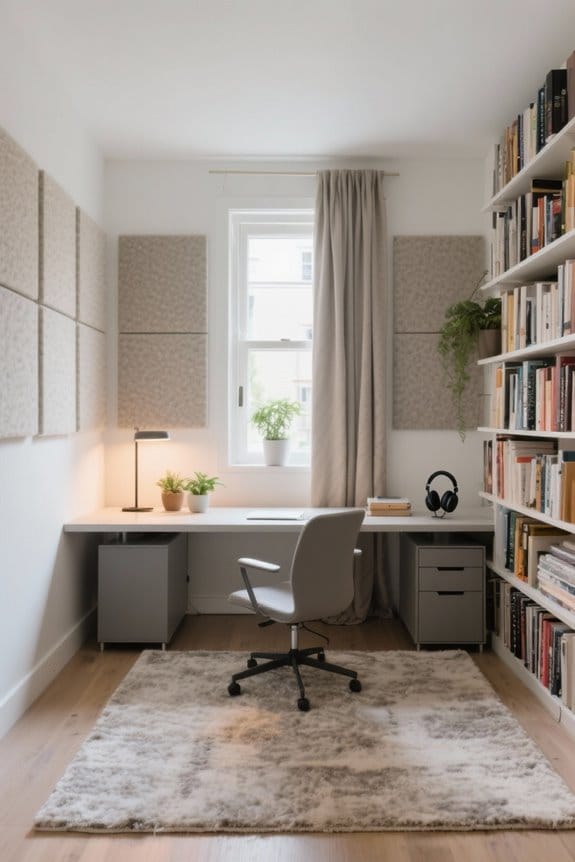
A well-structured workstation setup is essential for programmers and developers. Start with a desk that accommodates dual monitors and ergonomic features. Choose an ergonomic chair for lumbar support and adjustable height. Incorporate essential tech, like mechanical keyboards and effective cable management. Optimize lighting to reduce eye strain. Personalize your workspace with inspiring decor and plants. Maintain organization to enhance focus. Effective setups promote productivity and comfort, making work easier and more enjoyable. Discover additional tips to enhance your workstation further.
Key Takeaways
- Select an ergonomic height-adjustable desk to promote good posture and maximize workspace for dual monitors and essential tools.
- Invest in an ergonomic chair with lumbar support and adjustable features to reduce strain during long programming sessions.
- Implement effective cable management solutions to keep your workspace tidy and minimize distractions from clutter.
- Utilize dual monitors to enhance multitasking capabilities and improve overall workflow efficiency.
- Personalize your workspace with inspiring decor and plants to create a motivating atmosphere that enhances focus and creativity.
Choosing the Right Desk for Developers
When selecting a desk, developers should consider both functionality and ergonomics to enhance their workspace. The recommended desk width for developers ranges from 47 to 60 inches, which allows for dual monitors, a keyboard, and other essentials. Choosing ergonomic height-adjustable desks helps maintain proper posture and reduce strain from prolonged sitting. Additionally, corner desks are suitable for larger spaces, as they maximize surface area while accommodating additional equipment. A clutter-free desk is essential, so selecting a desk with cable management cutouts can minimize distractions from tangled cords. Ultimately, finding a desk that offers ergonomic comfort and the right height, typically between 28 to 30 inches, creates an effective programming desk setup for peak productivity. For an optimal workspace, ergonomic designs promote proper posture and reduce strain while working, ensuring developers can maintain focus and efficiency throughout their workday.
Recommended Products

The curved design of the wide wooden handrail firmly supports the arm.

The backrest can be adjusted from 90° to 145°, and the seat height can be adjusted.
As an affiliate, we earn on qualifying purchases.

Enjoy a 15° tilt and rocking for relaxation. Adjustable armrests for customized support and space-saving convenience
Ergonomic Chair: The Backbone of Comfort

An ergonomic chair is essential for programmers who spend long hours at their desks. This type of chair provides lumbar support to maintain good posture and minimize back pain. The adjustable height features guarantee that users can sit with their feet flat on the ground, promoting circulation and reducing leg strain. Many ergonomic chairs also include adjustable armrests, which help alleviate shoulder strain and support a comfortable typing position. Additionally, reclining options allow users to change their sitting position during breaks, reducing fatigue during extended work periods. Investing in a comfortable chair is not just a luxury; it is a necessity for long-term health and productivity. Programmers should prioritize ergonomic seating to enhance their workplace experience. Breathable mesh backrest materials are often used in ergonomic chairs to maintain coolness during long sitting sessions, ensuring comfort and preventing overheating.
Recommended Products

[High-Back Ribbed Design] The high-back design promotes good posture, offering essential support for your lumbar and upper back. Ribbed detailing on the seat and backrest enhances breathability and adds stylish texture, while the soft-padded armrests provide extra comfort, making it an ergonomic choice for long hours at the desk.

[MODERN DESIGN WITH EXECUTIVE STYLE] Sleek and professional, this ergonomic office chair enhances any home office, executive suite, or conference room. A perfect blend of style and function for modern workspaces.

Adjustable Support, All-Day Relief:This ergonomic office chair is designed for 8+ hours of intensive work, featuring a 3D adjustable headrest, targeted lumbar support and smooth slide seat. It conforms to your head, back, waist, hips and knees. This office chair big and tall distributes full-body pressure to eliminate prolonged sitting fatigue, delivering consistent ergonomic support to reduce discomfort and boost productivity all day.
Essential Tech for Developer Desk Setup

Creating an efficient developer desk setup involves thoughtful selection of technology and tools. An effective dual monitor setup allows programmers to enhance multitasking, viewing code and documentation simultaneously. Investing in a mechanical keyboard can greatly improve typing comfort, reducing hand strain during long sessions. Laptop stands promote proper eye level alignment, which supports good posture and minimizes neck strain. Effective cable management solutions, such as cable clips or sleeves, keep the workspace tidy and prevent distractions. To maximize desk space, utilizing a CPU mount is essential for an organized work-from-home setup. Selecting quality office furniture and ergonomic chairs plays a significant role in overall comfort and productivity. Adjustable height desks enhance work experience by allowing users to switch between sitting and standing, contributing to a successful developer workspace. Each of these elements contributes to a successful developer workspace.
Recommended Products

18” UHD+ 4K 200Hz DISPLAY — Enjoy ultra-sharp 4K quality for creative work and high refresh rates for silky-smooth gameplay, backed by 100% DCI-P3 color accuracy that’s Calman Verified for the most lifelike visual

FAST 16” OLED QHD+ 240Hz DISPLAY — Truly designed for the competitive gamer with 0.2 ms response time, featuring a VESA ClearMR 11000 rating and DisplayHDR 500 certified to ensure minimal blurring and vivid colors (1M:1 contrast ration and 100% DCI-P3)

LUXURIOUS SLATE DESKTOP: The distinctive texture of the natural rock undergoes a refined transformation through the intricate process of fine carving molding, resulting in a stunning effect.The modern trapezoidal legs add to the premium desk's overall aesthetic and give it a contemporary charm that will impress anyone who sees it.
Proper Lighting for a Software Developer Desk Setup

Proper lighting plays an essential role in a software developer’s desk setup. Good lighting can greatly enhance focus and productivity. Developers should position their desks near windows to maximize natural light, which improves mood and energy levels. Utilizing a desk lamp with adjustable brightness helps minimize glare and reduce eye strain during long coding sessions. LED desk lamps provide clear, focused lighting, particularly useful in low-light environments. Implementing backlighting solutions for monitors can further improve visual comfort and reduce contrast strain. Additionally, designing a lighting setup that adapts to changing natural light throughout the day is essential for maintaining sustained focus. A desk lamp with energy-efficient LED options not only saves costs but also supports a sustainable workspace. Ultimately, proper lighting not only supports health but encourages an efficient, enjoyable work environment.
Recommended Products

Lower head diffuser in thermoplastic

PIR occupancy sensor automatically turns the unit off when not in use, and back on when the user returns

Intelligent lighting in multiple formats. Adapts and transforms with your day.
Personalizing Your Coding Desk Setup

How can a personalized coding desk setup enhance a programmer’s work experience? By integrating personal touches, such as artwork or unique decorations, programmers can foster a sense of ownership and motivation. Utilizing a color scheme that appeals to an individual can improve focus and create a welcoming environment. Incorporating plants not only beautifies the space but also enhances air quality, reducing stress and increasing productivity. Chair mats made of eco-friendly materials can protect hardwood floors while contributing to a quieter environment, enhancing ergonomic benefits and usability. Efficient workspace organization, including labeled storage and tidy cable management, minimizes distractions and maintains a clutter-free desk. Ultimately, a thoughtfully designed desk setup can enhance a programmer’s overall effectiveness and enjoyment of their work. Programmers are encouraged to explore various customization options to elevate their coding environments and achieve ideal results.
Desk Shape and Layout
The shape and layout of a desk can greatly impact a programmer’s productivity and comfort. A straight desk setup efficiently accommodates essential equipment, making it ideal for smaller spaces. Corner desks offer additional workspace and enhance accessibility, especially when using a dual monitor stand. Height-adjustable desks promote ergonomic sitting by allowing users to alternate between sitting and standing, improving posture and reducing health risks. For effective workspace organization, desk width should range from 47 to 60 inches, ensuring enough room for necessary devices without overcrowding. Additionally, incorporating cable management features helps maintain a cleaner setup, allowing programmers to focus and minimize distractions. Weather resistance features are crucial for outdoor setups as they protect equipment from environmental elements. Choosing the right desk shape and layout is vital for creating an efficient workspace that supports development tasks.
Cable Management Solutions
Maintaining an organized workspace is essential for programmers, especially when managing multiple devices and connections. Effective cable management solutions can considerably reduce clutter and enhance the aesthetic appeal of a workspace. Using a cable management box helps conceal power strips and excess wiring, promoting a cleaner environment. Installing desktop cable trays under the desk keeps cords off the floor and reduces trip hazards while ensuring accessibility. Additionally, Velcro cable ties allow for easy adjustments as equipment needs change. Implementing color-coded cables improves identification for troubleshooting and maintenance, which can save valuable time. Cable clips and sleeves further aid in effective cable management, making the workspace more efficient and organized. Embrace these solutions for a streamlined programming experience. The Acacia Wood Box option offers a stylish and sturdy choice for cable management, featuring ventilation for heat diffusion and a secure magnetic lid for safety.
Recommended Products

Wire Covers, made from a flexible abrasion resistant pvc material, supplied coiled - uncoils to lay flat. (No need to add to boiling hot water to uncoil)

Holds up to 25lbs

Holds up to 25lbs
Creating a Productive Atmosphere
Creating a productive atmosphere is crucial for programmers seeking to enhance their focus and efficiency. A well-designed setup includes positioning the desk near windows for maximum natural light, which can elevate mood and boost productivity. Adjustable task lighting, such as LED desk lamps, helps prevent eye strain and reduces glare during darker hours. Additionally, a clean workspace is essential; employing effective cable management solutions minimizes distractions and promotes an organized environment. Incorporating an ergonomic standing desk can improve posture and comfort. Adding potted plants enhances air quality and creates a calming effect. Personalizing the workspace with inspiring decorations fosters creativity. By implementing these strategies, programmers can create an environment that markedly boosts their work effectiveness. Many LED desk lamps feature customizable lighting options that provide enhanced flexibility for tasks, making them ideal for diverse work settings.
Enhancing Comfort With Accessories
Enhancing comfort with accessories is crucial for programmers aiming to maintain productivity during long work sessions. An ergonomic chair with adjustable height and lumbar support is essential for supporting the spine and reducing the risk of back pain. Using keyboard trays and wrist rests helps keep hands and wrists in a neutral position, preventing repetitive strain injuries. A laptop stand elevates devices to eye level, which improves posture and reduces neck strain. Additionally, anti-fatigue foot mats encourage subtle movement and enhance comfort during long hours of standing. Effective cable management not only declutters the workspace but also minimizes distractions and tripping hazards. Investing in these accessories promotes a healthier and more efficient programming environment, enhancing overall work productivity. For those looking to enhance their workspace aesthetics, magnetic curtain rods offer a stylish and convenient solution for organizing window coverings without damaging surfaces.
Frequently Asked Questions
How Often Should I Take Breaks While Coding?
Experts recommend taking breaks every 25 to 50 minutes. This enhances productivity, reduces eye strain, and promotes mental clarity. Incorporating stretching exercises and mindful pauses aids work rhythm, coding stamina, and stress relief through effective focus techniques.
What Are the Best Chair Height Adjustments?
To optimize chair height, guarantee proper desk ergonomics by adjusting for seat depth, providing foot support, maintaining lumbar support, aligning armrest positioning, ensuring knee clearance, and following height recommendations with adjustment tools for ideal posture alignment.
Do I Need a Mouse Pad With Wrist Support?
A mouse pad with wrist support can alleviate wrist strain and enhance ergonomic benefits. Users prefer various mouse pad types based on material, portability concerns, and desk space, balancing needs for gaming versus office tasks.
How Can I Minimize Screen Glare?
To soften visual distractions, one might consider implementing screen filters, adjusting ambient lighting, optimizing monitor placement, employing anti-glare screens, adjusting window treatments, enhancing desk positioning, controlling screen brightness, and refining viewing angles for ergonomic adjustments.
What Should I Consider When Choosing Headphones?
When choosing headphones, one should consider noise cancellation features, sound quality importance, comfort during usage, Bluetooth versus wired options, durability and lifespan, budget, brand preferences, design aesthetics, and versatility for various activities.