


A weekly maintenance routine is essential for an organized workstation. It enhances efficiency by preventing clutter and improving accessibility. To maintain an orderly space, individuals should dedicate 30 minutes weekly for tasks like cleaning electronic devices, organizing supplies, and purging outdated materials. Implementing daily decluttering habits can further support this effort. Additionally, encouraging team participation fosters accountability and cleanliness. These practices not only boost productivity but also contribute to a professional image. More insights on maintaining an organized space await you.
Key Takeaways
- Dedicate 30 minutes weekly to purge outdated materials, sanitize surfaces, and clean electronics for improved hygiene and efficiency.
- Maintain a checklist to ensure all tasks are completed, promoting accountability and tracking progress in workspace maintenance.
- Review office supplies regularly to ensure essentials are stocked, preventing clutter and enhancing organization.
- Implement daily five-minute decluttering habits to remove unnecessary items and maintain an orderly environment consistently.
- Foster team participation through a rotating cleaning schedule, reinforcing shared responsibility for a tidy workspace.
Importance of a Weekly Maintenance Routine
Regularly engaging in a weekly maintenance routine is essential for any workplace. This practice prevents clutter accumulation and keeps workspaces functional. Weekly maintenance includes cleaning tasks that promote efficiency and reduce time spent searching for items. By reviewing and purging outdated materials, employees can maintain an organized environment. Additionally, the routine enhances office hygiene, helping to reduce the spread of germs. Cleaning and sanitizing electronics, such as computer screens and keyboards, minimizes health risks while ensuring devices perform efficiently. Implementing a structured approach to weekly maintenance fosters accountability among team members, encouraging them to share responsibility for a tidy workspace. Overall, routine maintenance leads to a professional, efficient, and sustainable workplace. Incorporating wall organizers into office spaces can further reduce clutter by providing a stylish solution for organizing important items.
Setting Aside Time for Weekly Maintenance

Engaging in routine workspace maintenance demands a dedicated time allocation each week. Setting aside just 30 minutes can make a significant impact. During this regular maintenance, users should review and purge outdated materials from bulletin boards. This keeps the environment clutter-free. It is also vital to clean computer screens, keyboards, and phones with appropriate cleaning supplies. Enhancing hygiene not only improves the workspace’s aesthetic but also promotes better equipment performance. Keeping a checklist for these weekly tasks guarantees accountability and tracks progress effectively. Centralizing sticky notes and business cards reduces scattered items. Implementing stackable designs in your workspace can help maximize vertical space, thereby enhancing organization. Overall, regular maintenance is important for enhancing workflow efficiency and sustaining a well-organized workstation. Prioritizing this time leads to a cleaner, more sustainable workspace.
Daily Decluttering as a Habit

Creating a tidy workspace boosts productivity and focus throughout the workday. Daily decluttering as a habit can take just five minutes at the end of each day. This practice markedly reduces clutter and prepares the workspace for the next day. Regularly removing unnecessary items, such as old cups and outdated documents, is essential for effective office organization. Establishing a designated home for each item guarantees quick returns to their respective spots. A clean-as-you-go policy encourages tidiness and furthers daily office cleaning efforts. Consistently wiping down desk surfaces promotes hygiene and boosts employee morale. File folder holders are essential tools for effective desk organization, improving document accessibility and enhancing productivity. Ultimately, integrating daily decluttering into routines leads to a more organized environment, enhancing overall workplace efficiency and employee satisfaction.
Organizing Documents and Supplies
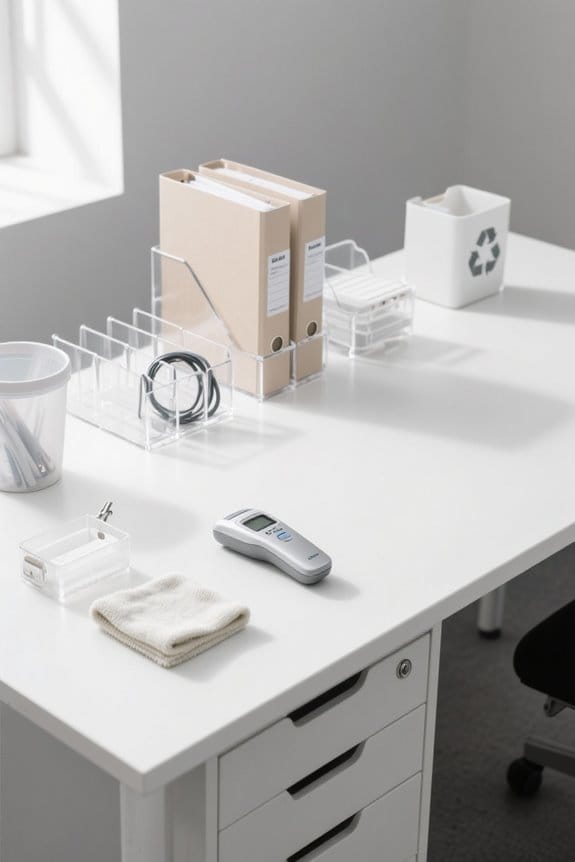
Organizing documents and supplies is essential for maintaining an efficient workspace. A clear filing system with labeled folders helps guarantee that all documents are easily accessible. Regularly designating time each week to sort, file, or digitize paperwork promotes a clutter-free environment. Desk organizers, such as trays and dividers, can group similar office supplies together, preventing chaos from scattered items. Implementing a “one in, one out” policy for office supplies controls inventory and encourages organization. Additionally, dedicating 10-15 minutes weekly to clean desk drawers and shelves guarantees that only necessary items remain visible. By following these practices, individuals can enhance productivity and create a sustainable work environment that reflects craftsmanship and efficiency. A compact design ensures that mail organizers fit well on any desk, maximizing vertical space usage and contributing to a minimalist setup.
Utilizing Storage Solutions Effectively

An effective workstation relies heavily on utilizing storage solutions that enhance both organization and efficiency. Desk organizers, such as file holders and drawer dividers, play an essential role in sorting small items. This setup reduces desktop clutter and aids in cleaning. Trays for incoming and outgoing documents streamline paperwork handling. Additionally, employing a label maker guarantees that all storage solutions are clearly identified, making supplies easy to find and return. Investing in shelving or storage bins maximizes vertical space, accommodating office supplies without overwhelming the desk. Integrating stackable and tiered designs can further optimize the use of vertical space in your workstation. Finally, adopting a “one in, one out” rule for new office supplies promotes mindfulness around purchasing and organization. These strategies lead to a cleaner, more efficient workspace, boosting productivity.
Assigning a Home for Each Item
A well-structured workstation benefits greatly from assigning a designated home for each item. This practice fosters organization, reducing clutter in the office space. When every item has a clear spot, employees can quickly locate and return supplies to their proper places. Utilizing desk organizers and storage solutions markedly enhances accessibility, minimizing the time spent searching for materials. By consistently returning items to their assigned locations, team members contribute to a clean desk, supporting a proactive cleaning schedule. Establishing homes for items streamlines daily tasks and promotes a sense of responsibility regarding office cleanliness. This approach cultivates accountability among coworkers, ultimately boosting productivity in the workplace. Implement this routine to enhance efficiency and maintain a professional environment. Using high-quality acrylic organizers ensures superior transparency and heat resistance, allowing for durable and efficient workspace organization.
Regularly Cleaning Your Workspace
Maintaining a clean workspace is essential for productivity and employee well-being. Establishing a weekly cleaning routine brings order to a cluttered environment. Dusting surfaces, wiping down desks and equipment, and sanitizing high-touch areas are key tasks for maintaining a clean office. Additionally, setting aside time to empty trash bins, clean out the refrigerator, and dispose of outdated materials helps prevent clutter and odors. Regular deep cleaning, including vacuuming carpets, mopping floors, and cleaning windows, contributes to a neat atmosphere. A review of office supplies during this weekly maintenance guarantees essentials are restocked. Utilizing a checklist streamlines the cleaning process and holds individuals accountable, promoting effective office cleaning habits that enhance overall workspace functionality. Incorporating desk file organizers can further maintain organization by providing structured storage solutions and maximizing vertical space.
The Role of a To-Do List in Organization
Organizing tasks effectively can profoundly impact workplace productivity. A to-do list acts as a structured guide, enabling individuals to prioritize tasks and monitor progress throughout the week. Including necessary cleaning tasks on a to-do list enhances accountability, ensuring that workstation maintenance does not get overlooked. Research indicates that writing down tasks increases completion likelihood by 42%, making the to-do list an essential productivity tool. By breaking down larger cleaning projects into smaller, daily tasks, individuals can avoid feeling overwhelmed. Regular updates to the to-do list foster a sense of achievement, motivating individuals to keep their work environment organized and clean. Adopting this method can lead to a more efficient and pleasant workspace, encouraging sustainable habits and ergonomic practices. Using desk drawer organizers can further enhance the organizational process by providing efficient storage solutions for various office supplies, ensuring a clutter-free workspace.
Managing Digital Clutter
Digital clutter can hinder productivity and create unnecessary stress in the workplace. To foster an efficient office environment, organizing digital files into clearly labeled folders is vital. This system simplifies access, reduces search time, and promotes efficiency. Establishing a weekly schedule for decluttering the email inbox can also contribute to a more organized workspace. Aim for “inbox zero” by unsubscribing from unnecessary newsletters and deleting irrelevant messages. Utilizing cloud-based storage reduces physical space for paper documents while supporting collaboration among team members. Additionally, regularly backing up important files guarantees data security. Dedicate 10-15 minutes weekly to review and sort files, enhancing overall well-being. By prioritizing these practices, employees can create a tidy digital landscape that bolsters productivity. For physical organization, consider using under-sink organizers to maintain a clutter-free environment in home offices, maximizing both physical and digital workspace efficiency.
Encouraging Team Participation in Cleanliness
Creating a clean and organized workspace is essential for productivity, especially when a team actively participates in cleanliness efforts. Encouraging team participation fosters a culture of shared responsibility, enhancing overall morale. Establishing clear guidelines for cleaning tasks promotes accountability and raises cleanliness standards. A rotating cleaning schedule guarantees all team members contribute equally, making task management easier. Additionally, recognizing team efforts can motivate employees and reinforce the importance of a tidy environment. Open discussions about cleanliness allow members to share best practices and develop support for maintaining a clean space. By prioritizing teamwork in cleanliness, organizations can create an ergonomic and sustainable workspace that benefits everyone involved. Encouraging participation guarantees everyone enjoys the advantages of a well-maintained area. A non-slip design in office chair mats can further enhance overall safety and comfort in the workspace.
Establishing a Cleaning Checklist
Establishing a cleaning checklist is an essential step in maintaining an effective workstation. This checklist should include specific tasks assigned to each day of the week. Daily duties may involve organizing files, cleaning surfaces, and checking equipment. Weekly responsibilities should encompass emptying trash bins, dusting, and sanitizing common areas. A collaborative approach is recommended, where tasks are assigned to team members or rotated to encourage collective responsibility. This promotes a cleaner office environment. The cleaning checklist also serves as a tool to track progress and guarantee accountability. Regularly reviewing and updating the checklist based on feedback enhances its effectiveness. Implementing this structured plan will optimize organization and maintain a hygienic workspace.
Benefits of an Organized Workstation
An organized workstation greatly boosts productivity and efficiency in the workplace. Studies reveal that a tidy workspace can increase efficiency by 20%, allowing employees to focus better and reduce distractions. Moreover, an organized workstation reduces the time spent searching for items by up to 30%, directly enhancing overall productivity. Employees also experience lower stress levels and greater job satisfaction, promoting a healthier work environment. Maintaining an orderly workspace increases motivation and engagement by 15%. Additionally, a well-organized workstation contributes to a professional image, which positively influences client perceptions and can lead to potential business opportunities. For these reasons, embracing organization practices is essential for fostering a conducive work atmosphere that supports both productivity and professionalism.
Frequently Asked Questions
What Is the 12 12 12 Rule for Decluttering?
The 12 12 12 rule is a decluttering strategy that encourages individuals to remove 12 items to throw away, 12 to donate, and 12 to relocate, promoting organization through a manageable 12 item limit.
What Is the 1/3/5 Decluttering Rule?
The 1/3/5 decluttering rule encourages adopting a decluttering mindset by retaining three items for every one discarded. This organization tactic limits desk items to five, fostering focus, reducing overwhelm, and enhancing productivity in workspaces.
How Do You Keep Your Workspace Organized?
To keep the workspace organized, one must prioritize workspace aesthetics by utilizing effective storage solutions. Regular evaluation and decluttering guarantee a functional environment, enhancing both productivity and visual appeal through systematic organization and mindful maintenance practices.
What Are the 3 P’s for Having a Clean Desk?
To keep a clean desk, one should follow the 3 P’s: Personalize to reflect individuality, Prioritize essential items for focus, and Purge unnecessary clutter regularly, ensuring everything has its place and contributes to an organized workspace.


