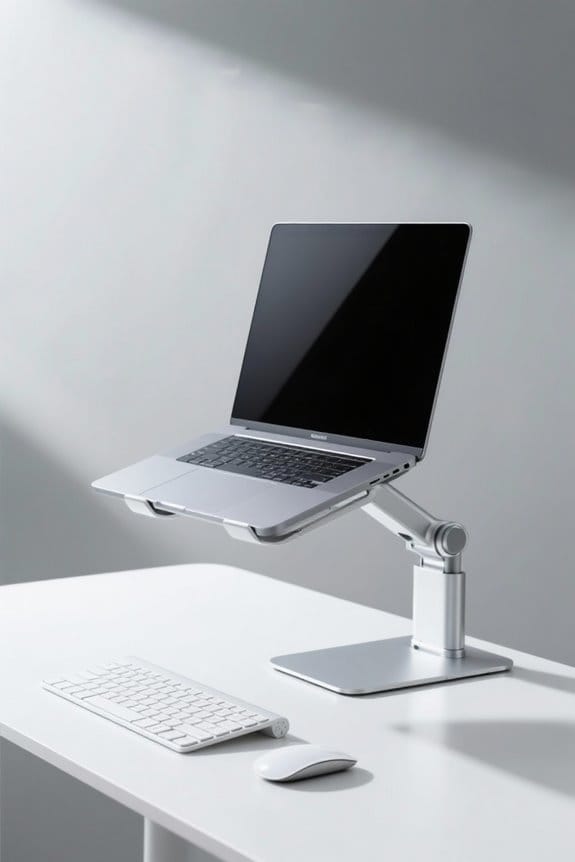
Creating personal rituals to start and end the workday improves focus and emotional wellness. Begin by tidying your desk for a clear workspace and compose a prioritized to-do list. Incorporate brief physical activities to energize. At the day’s end, review accomplishments and organize for tomorrow. These practices establish boundaries that enhance productivity and personal time. Incorporate ergonomic solutions to care for your physical well-being. Discover more effective strategies to elevate your workday and maintain balance.
Key Takeaways
- Begin your workday by tidying your desk to create a focused and organized environment.
- Engage in brief physical activity or stretching to invigorate your mind and body.
- Create a prioritized to-do list to act as your roadmap for effective time management.
- At the end of the day, review completed tasks and organize your workspace to reduce distractions.
- Reflect on your achievements and plan for tomorrow to foster a positive transition from work to personal time.
The Importance of Rituals in the Workday
Why are rituals essential in the workday? Establishing a shutdown ritual is vital for managing time effectively and reducing stress. These rituals mark the end of the workday and help create clear boundaries between professional and personal life. Time management experts, such as Laura Vanderkam, emphasize that structured rituals increase productivity. Simple tasks like creating to-do lists and tidying workspaces can enhance organization. By reviewing completed tasks or practicing mindfulness, individuals can achieve better mental clarity. This clarity guarantees a smoother shift into the next workday. Incorporating rituals into the workday enhances productivity and wellness, similar to the benefits provided by ergonomic adjustable desks. Overall, incorporating rituals into the workday promotes intentionality and focus. Adopting these practices can greatly benefit anyone looking to optimize their work hours and improve work-life balance.
Starting Your Workday With Intent

Starting the workday with intent can greatly influence productivity and overall well-being. Establishing a starting ritual, such as tidying the desk or preparing a favorite beverage, creates a focused environment. Engaging in brief physical activity, like stretching, invigorates the mind and body. This preparation is essential for meeting important tasks throughout the day. Practicing Heart Focused Breathing™ for a few moments helps center thoughts and reduces anxiety. Additionally, creating a prioritized to-do list each morning acts as a roadmap for effective time management. Consider playing a specific song at the start of work time, serving as a psychological cue to shift into a productive mindset. These practices enhance efficiency, directly impacting the success of the workday. Choosing an ergonomic design for your office chair can improve focus and productivity, ensuring you remain comfortable and supported throughout your tasks.
Setting Boundaries With Shutdown Rituals

Regularly implementing a shutdown ritual can greatly impact one’s work-life balance. These rituals help end the workday on a positive note by reviewing tasks and planning for the next day. Organizing both physical and digital workspaces reduces distractions and can lead to improved focus. Studies show that a clear endpoint fosters a sense of urgency, enhancing productivity. Engaging in self-care practices post-work reinforces the importance of personal time. This approach not only provides emotional closure but also establishes clear boundaries between work and home life. By integrating shutdown rituals, individuals can enhance their overall productivity and guarantee a more sustainable work-life balance. Creating effective boundaries ultimately benefits both mental clarity and personal well-being. Incorporating under desk storage solutions into your workspace can maximize available space and improve organization, contributing to a more efficient work environment.
Quick Transition Techniques for Better Focus

Maintaining focus between tasks can enhance productivity and guarantee a smoother workflow. Quick shift techniques, lasting 30 seconds or less, can notably improve concentration. Activities like deep breathing or light stretching prepare the mind and body for upcoming tasks. Engaging in short physical movements, such as a quick walk, increases blood flow and energy. Establishing a specific action, such as playing a designated song, signals the beginning or end of the workday. Reviewing completed tasks or outlining priorities for the next day provides clarity and focus during shifts. These methods help create clear work-life boundaries, reducing stress and promoting a more productive atmosphere. Implement these techniques to optimize every work session and enhance performance. Incorporating tools like adjustable foot hammocks can also aid in maintaining proper posture and reducing fatigue during long sitting sessions.
Overcoming Clutter for a Clear Mindset

How can one create a productive workspace that fosters clarity and focus? Overcoming clutter is essential for an effective workday. Cleaning up your physical space reduces distractions and promotes better mental health. Studies show that physical clutter can limit cognitive processing. A tidy desk encourages a clearer mindset, improving productivity. Digital clutter is equally harmful; multiple open tabs and disorganized emails can lead to task-switching, resulting in decreased efficiency. Regularly decluttering both physical and digital environments creates a conducive workspace, enhancing overall emotional well-being. By implementing a cleaning routine at the end of each day, individuals can prepare for the next session. This simple action can impart a sense of accomplishment and foster a focused mindset essential for success. Using under desk cord organizers can further declutter your workspace, enhancing organization and ergonomics.
Reflecting on Accomplishments to Boost Motivation
Reflecting on accomplishments enhances mood and reinforces motivation. Research by Teresa Amabile shows that acknowledging progress leads to higher satisfaction and productivity. Celebrating small achievements fosters a positive cycle, improving future performance on tasks. A simple three-step process can combat procrastination: face discomfort, engage in honest self-reflection, and identify actionable next steps. Regular end-of-day reflections can facilitate this process. Keeping a record of completed tasks helps prevent guilt and anxiety about unfinished work. Integrating reflection into daily rituals allows individuals to track progress visually. This clarity not only enhances motivation but also improves work-life balance. Incorporating reflective practices into your workspace can be as effective as choosing the right desk organizer, such as the Bamboo Desktop Organizer, which contributes to a sustainable and aesthetically pleasing environment. Start the habit of reflecting today for better results tomorrow.
Planning for Tomorrow: The Power of a To-Do List
Effective planning for the next day profoundly enhances productivity and focus. Creating a to-do list at the end of the workday can reduce cognitive load. This practice allows for a clear shift into personal time while markedly boosting productivity for the following day. Research shows that a pre-planned to-do list can lead to 20% more productive outcomes. By identifying and prioritizing tasks, workers reduce decision fatigue, optimizing their amount of time spent on essential activities. Highlighting high-priority items increases motivation and guarantees they receive necessary attention. Engaging in this structured planning routine reinforces goal-setting behavior. Consequently, spending a few moments before leaving work to draft a to-do list can greatly improve workplace satisfaction and success. For optimal organization, consider using desk drawer organizers to streamline your workspace, further enhancing your planning process.
Building Emotional Closure at Day’s End
Building emotional closure at the end of the workday plays an essential role in maintaining mental well-being. By setting a definitive shutdown time, employees can effectively leave work-related thoughts behind. Engaging in an office ritual, such as reviewing tasks completed and planning for the next day, enhances productivity. This process paves the way for a successful start the following morning. Practicing self-compassion and gratitude during this time fosters positive emotions that boost workplace morale. Reflecting on accomplishments helps individuals recognize progress, improving motivation. Incorporating self-care activities supports a healthy work-life balance, fundamental for emotional stability. Creating a personal ritual at day’s end guarantees that time spent at work is productive while maintaining mental health. For those who stand for long periods, incorporating anti-fatigue mats into their workspace can significantly reduce physical strain, thereby contributing to overall well-being.
Frequently Asked Questions
What Is a Shutdown Ritual?
A shutdown ritual is a structured process for sign off that helps establish work time boundaries. This mental shift allows individuals to review tasks completed and prepare for the next day, improving overall well-being and productivity.
How to Create Your Own Rituals?
To create personalized rituals, individuals weave together ritual elements that hold personal significance, much like a tapestry. Daily consistency transforms these practices into anchors, fostering focus and meaning in the rhythm of their everyday lives.
What Are Closure Rituals?
Closure rituals serve as essential practices that signify the end of the workday, facilitating emotional shifts. They enhance productivity by promoting reflection and organization, ultimately supporting a healthier work-life balance and fostering well-being.
What Is a Work Ritual?
A work ritual is a structured work routine that incorporates mindful practices, providing a productivity boost. These sequences help employees shift into and out of work, enhancing focus while establishing boundaries between professional and personal life.